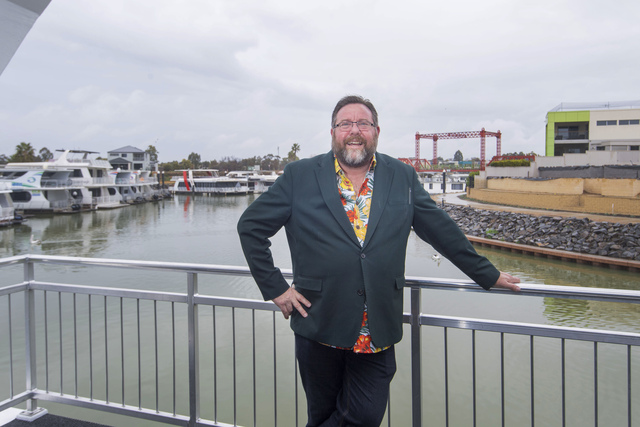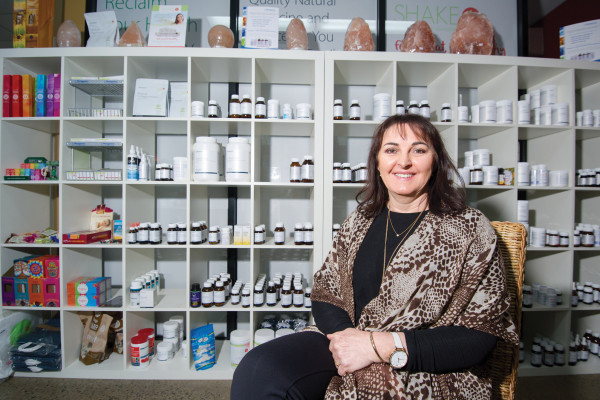
Heather Musgrove is Mildura’s complementary medicine superstar. A qualified naturopath, herbalist, nutritionist, midwife and registered nurse, she’s been treating Sunraysia’s health and wellness needs for decades, from insomnia to fatigue and beyond. She chats with Teagan Bell about the opening of her new business, the decision to become a qualified functional medicine practitioner and what it’s like working in the complementary medicine industry. Picture: Krystal Torney
How would you describe what you do?
A herbalist, naturopath or nutritionist tries to find solutions to health and wellness that involve dietary and lifestyle changes, often alongside supplement use. So we try to find a balance in the body using all the different modalities.
How did you get into the industry?
I’ve always been interested in natural medicine and I was a practicing midwife for 15 years where I incorporated holistic therapies with my homebirth clients, so I always had a strong interest. About 12 years ago we had a visiting naturopath at the spa I used to own and I decided to study underneath her. She is an international speaker who has published two books, so I had a fantastic trainer and mentor and still do.
What can someone expect during a consultation with you?
A lot of questions. They actually have to complete an extensive online appraisal before I even see them, which takes around 45 minutes. In functional medicine, we’re really looking for the “never well since”. So we ask a lot of questions which go back to childhood and even to when they were still inside their mother and the birth process, which may be contributing to the condition they present with.
There’s a lot of hands-on testing too, so we do a tongue examination, fingernail examination, a physical examination, test PH levels and their zinc tally – lots of little clinical things to get a picture of someone’s overall health.
What’s the most common presentation you see?
Fatigue. That’s the number one. Pretty much everyone in the Western world suffers with fatigue, so that is the most common. And then that’s closely associated with things like insomnia, weight gain, anxiety, stress, aches and pains, and joint pain.
Why do you think it’s important for people to have access to complementary medicine?
92 per cent of Australians will die from a chronic, lifestyle-preventable disease. Traditional medicine doesn’t really have solutions for chronic disease, so that means 92 per cent of us are killing ourselves either through diet, lifestyle or our medications. Complementary medicine is the modality that helps manage and even reverse chronic disease as well as prevent it, so it is really important because yes, we are living longer, but we don’t want to live with chronic conditions.
Do you think there are misconceptions around complementary medicine?
Absolutely. The biggest one is that there is no evidence to support what we do, which is absolutely untrue. There’s basically no sentence that a functional medicine practitioner will say that is not evidence based.
The other misconception is that all the modalities, from nutrition and naturopathy to the more obscure ones, are all the same so they all get lumped into one and passed off as “witchcraft” or whatever. This isn’t true either. Nutritionists only advise on diet, whereas someone like a naturopath can use herbs, vitamins, nutrition and meditation.
What Australia needs to do is ensure that professions like naturopaths are on APHRA (the Australian Health Practitioner Regulation Agency) so that their training and accountability is controlled because at the moment when we’re out on the fringe, anyone can say they’re a naturopath and there’s nobody critiquing or regulating that.
What is the most rewarding part of your career?
Watching people turn their lives dramatically around and putting them back in control of their health. Because I don’t really do anything – they are the ones that hold the power to change their lives. So it’s seeing that empowerment of people when they realise they don’t have to accept that ill state of being.
What are some of the challenges?
Definitely keeping up with the work load. I am overbooked at the moment, I’m studying and at the same time I have to practice what I preach. It can be difficult to be able to physically do it all.
Tell me about your new business.
Live Well started in May. It’s my dream to bring all modalities of health and wellness together into one centre, so I’ll be setting up a new clinic next year.
The idea is for it to be multi-disciplined so it’ll have other complementary health practitioners there, whether that be acupuncture, massage, meditation, yoga or anything else, plus all the things people might be interested in from books about affirmations to health foods they can’t get anywhere else.
Hopefully it will be up and running by May 2020, but I am currently looking for other practitioners in the area that would like to join me.
Why have you decided to study functional medicine?
My personal goals are always about helping people to be the best version of themselves and that’s through using whatever I’ve got in my toolbox.
This course gives me the depth and level of education I was looking for and I felt that it was the best program available. Functional medicine is a specialty that is usually undertaken by doctors which enables them to use natural lifestyle interventions instead of, or beside, pharmaceuticals. So it’s really about getting to the root cause of an ailment and addressing it, rather than band-aiding the symptoms.
I need as much knowledge as I can to help people, so that’s what prompted me to study. I want to keep expanding on the options I can offer people because we are quite isolated here.
What are the words you live by?
My motto in life is “everything happens for a reason”. And that might be hearing about a practitioner or an exercise class or dietary intervention. If you listen to the things around you your higher self is often guiding you to what you need. People often intuitively know when their job or relationship is no longer serving them, or which food is harming them, so it’s about tuning in. There are no chance encounters.
Do you have any advice for people to improve their well-being and health right now?
We are, in the simplest terms, a three-legged stool. And those legs are stress and sleep, diet and nutrition and movement and exercise. So you’ve got to have balance in those three areas. If you’re fatigued and you’re not sleeping then that’s the area you need to address first. If you’re fatigued and not exercising, that’s the area you need addressed. If you’re fatigued and not eating properly, then address that.
Fatigue often presents with problems in all three areas but one will usually be dominating, and that’s the one that needs to be addressed before any other.