IT’S now more than 30 years since the Vinelander train service was discontinued, so maybe it’s time to stop flogging that dead horse.
We could still make use of its cart, though.
Honestly, I do think it’s a shame the train went and I sympathise with the passionate minority continuing the fight for its return. I used it a lot as a young person growing up here and I’d use it again if it came back, but surely it’s clear by now that it’s not going to.
So we’re left with a train track that slices between the city and its jewel, the riverfront, just to carry two or three big freight trains a week.
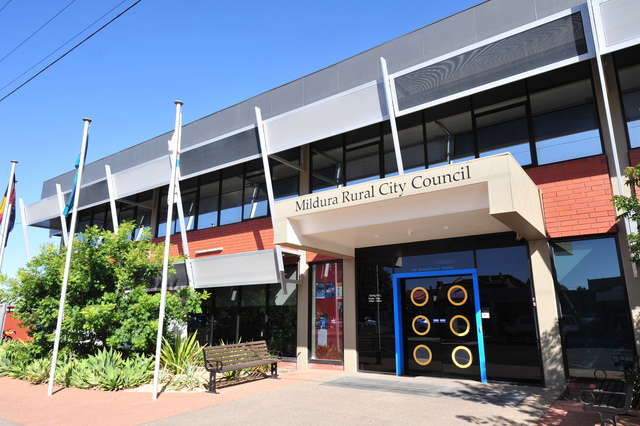
The idea of removing the track altogether for a seamless joining of city and river has been around for at least 25 years, and I know that because back then, I was working for the Mildura council and people were talking about it there at the time. It was pretty much just talk, though, because the expense of rerouting the freight line around town seemed too great to be realistic.
This century, things are a little different. The council has built a long-term strategy for riverfront redevelopment and, if it can get VicTrack to make its unused riverside land available, there are private developers ready to jump on board and turn that rail corridor into something special.
I suspect that will happen one day, but I’m not so sure about the greater ambition to get rail out of the city completely. As long as we have rail freight, we’re going to need some sort of track but, unless we run a great many more freight trains from here, which seems unlikely, it’s going to be hard to find a business case for the extraordinary expense of rerouting. In other words, it’s still too expensive.
So how about we keep that track, but make better use of it by reintroducing passenger rail, only in a different form.
Since the Vinelander left us, the populations of Red Cliffs and Merbein, both connected to Mildura by that line, have roughly doubled, while Irymple, on the same line, has expanded even more and is now virtually a Mildura suburb.
All three centres have grown as they’ve increasingly become dormitory towns for thousands of people whose work or study is based in Mildura. The housing is a bit cheaper than Mildura’s and the lifestyle is a little less urban, so that growth is probably going to continue and more people are going to be travelling between the city and its satellite centres.
Meanwhile, in Mildura, the roads are becoming more congested, especially at peak times, car parking is harder to find and the council has an environmental policy that aims for a zero-emissions future.
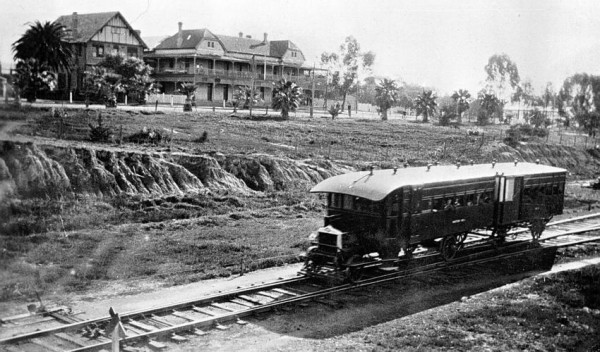
A hundred years ago, when car ownership was still relatively rare in Sunraysia and the roads were mostly rough, car-breaking tracks, light-rail services ran between Mildura and Merbein and Red Cliffs. The roads got better, though, and the cars improved even more, so eventually the short drives between the towns became more practical.
But if we’re planning for the Mildura riverfront zone to get the best use out of it, and if getting rid of that train line is going to be just too hard, how about we go to the Victorian government and say, OK, we know you’re not going to give us back our train to the city, but maybe you could instead help us set up a proper commuter service in a growing regional centre.
It’s often said that government bureaucrats in the city don’t understand how we live in the bush and maybe that’s at least a bit true, but Melbourne bureaucrats definitely should understand the value of commuter rail between urban centres and dorm suburbs, because that city runs on it.
A Sunraysia commuter train wouldn’t need to run as often as a Melbourne version, of course, nor be as big.
Something the size of a Melbourne tram body (and these are built in Victoria), sat on bogeys of the appropriate gauge and powered by a modern electric motor, would probably suffice to begin with, but there also might be opportunities to use unused Melbourne train carriages.
Morning and evening peak services would be the most popular, but there should also be scope for some off-peak runs and school-times runs, weekend services and even some night trains (which might be very popular on Friday and Saturday nights), all aligned to the Myki ticketing system.
We could keep our bus system, because that can pick up and drop off wherever there’s a road, but surely it could be redesigned to complement the light rail, rather than compete with it.
Would this plan make money, or just break even? Probably not, because public transport almost never does, but that’s OK. Good public transport can help drive economies and, in the case of our remote region, it can help build lifestyle options that can draw people we need from the cities.
It’s an investment in the future and a community asset we haven’t had for a very long time, so if there’s now the will and the reasoning to really make the best of our city’s place alongside the nation’s greatest river, and if we have to do that around a rail line that won’t budge, let’s put that line to better use for the wider Sunraysia community.