WITH a blood alcohol concentration (BAC) of 0.15, the risk of being involved in a crash is more than 20 times greater than with a BAC of zero.
Samuel Davidson allegedly returned a reading of 0.15, three times over the legal blood-alcohol limit, when his heavy ute mounted the kerb and slammed into a group of seven children on a footpath in Sydney’s north-west last Saturday night.
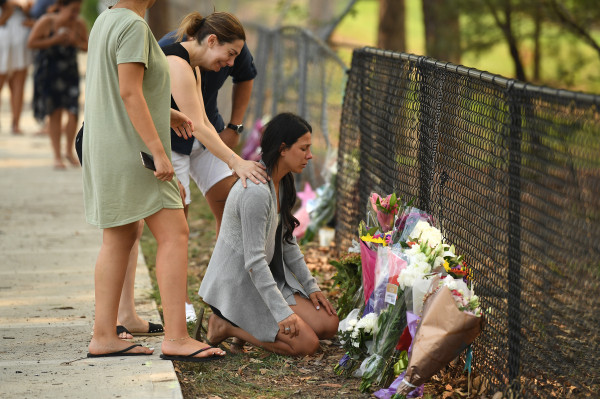
Siblings Antony Abdallah, 13, Angelina Abdallah, 12, Sienna Abdallah, 8, and their 11-year-old cousin Veronique Sakr were killed. Three others were seriously injured, including an 11-year-old boy and two girls, aged 10 and 13.
The seven children, all from one extended family, had been walking to buy ice cream when they were struck.
Davidson and his mates had allegedly been drinking and having fun around a pool on a hot Sydney day when he made the ill-fated decision to drive 1.8km to buy some snacks.
That sliding-doors moment changed lives forever.
As a parent, I’ve found the tragedy too harrowing to watch and certainly too difficult to comprehend. And it’s not only the grief of the parents of the dead children that has resonated so deeply, but also the parents of the driver, who fronted the media this week to express their sorrow. In their own words, they say they have effectively lost their son.
You can’t imagine the pain ripping apart both families.
Samuel Davidson wouldn’t be the first young bloke to decide to get in a car to drive for snacks after having too many drinks.
But the impact of his decision last Saturday night needs to stick with all of us.
It needs to serve as a reminder of the potential consequences of getting behind the wheel when you’re over the limit.
It needs to be spoken about by mates who need to be strong enough to stop each other from grabbing the keys under any circumstances when they’ve been drinking. There is no excuse. When one of your mates is considering driving after drinking, remind them of that tragedy in Sydney. Remind them that the price is just too high.
Despite countless campaigns by the TAC, drink-driving remains one of the biggest killers on Victoria’s roads, with a five-year average of about one in five drivers and riders killed having a BAC over the legal limit of 0.05.
There is clear evidence about why this happens.
Driving impairment occurs even at low BAC levels, so consider these numbers:
At .02 to .05 BAC – the ability to judge distances and to see or locate moving lights correctly is reduced. The tendency to take risks is increased and the ability to respond to several stimuli is decreased.
At .05 to .08 BAC – the ability to judge distances is further reduced, reactions are slower and concentration span is shorter.
At 0.08 drivers are five times more likely to have a crash than before they started drinking.
At .08 to .12 BAC – overconfidence sets in, overestimation of one’s abilities leads to reckless driving and peripheral vision and perception of obstacles are impaired.
At 0.12 drivers are 10 times more likely to have a crash and, at over 0.15, 20 times greater.
Two families will never get over one moment of madness last Saturday night.
That driver can’t turn back time.
But the rest of us have an easy decision to make in the future.