MALLEE sunshine will power food giant Mars Australia after the company announced it would become one of Australia’s first to go 100 per cent renewable.
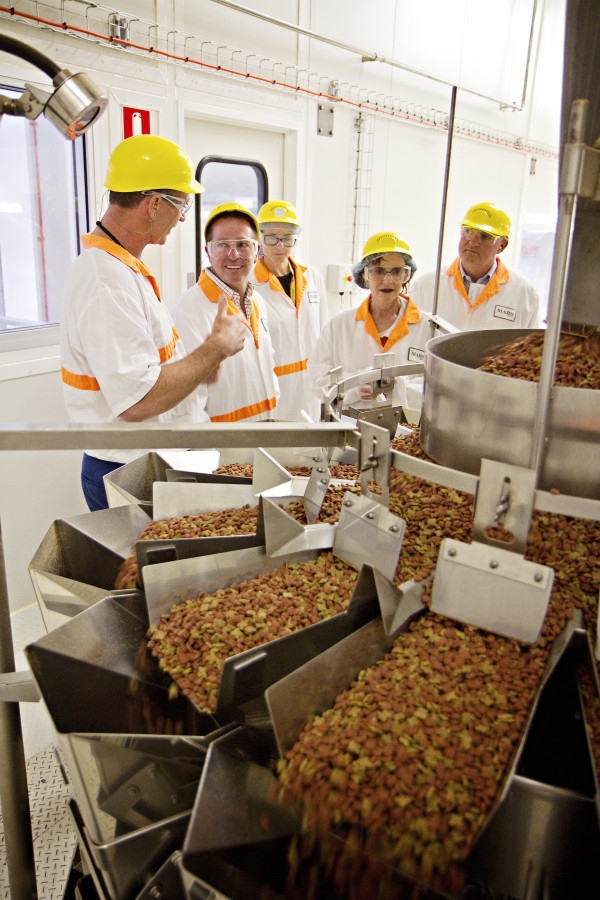
The company is behind some of the country’s best-known brands including Mars Bars, MasterFoods and M&Ms.
The sweet deal means Mars’ Australian operations, which include six factories and two offices, are now offset by energy from Kiamal Solar Farm, north of Ouyen.
Mars Food Australia general manager Bill Heague said he was proud to announce the switch.
“We believe business, government and individuals must work together to take meaningful action on climate change,” Mr Heague said.
He said consumer demand was a big part of the push for renewables and “we know consumers want to see action on climate change”.
The majority of Mars products enjoyed by Australians were Australian-made, he said, and the transition to renewable electricity “makes sense for our business and the planet”.
The business case for switching to solar was clear, RE100 Australia co-ordinator Jon Dee said.
“Last year Mars consumed over 85GWh of electricity in Australia. In light of Australia’s fluctuating energy costs, it’s a sound business decision for Mars to invest in that amount of solar power,” Mr Dee said.
“Other companies in Australia need to follow that lead.”
Kiamal Solar Farm is owned by Total Eren, a company majority-owned by Total, a French multinational valued at more than $150 billion.
Michael Vawser, Asia-Pacific regional director of Total Eren, said the solar farm had signed contracts with Mars Australia, Alinta Energy, FlowPower, Zero Emissions Water and Origin Energy.
The power generated at Kiamal Solar Farm goes to the national grid, which increases the ratio of renewable energy in the National Energy Market.
The Kiamal Solar Farm has an eventual grid output of 256MW and the deal with Mars Australia will take up 50MW of that output.
The solar farm spans over 4.6km2 and contains 718,000 solar panels.
Andrew Bray, national director for renewable energy advocacy group Re-Alliance, said Mars’ commitment benefited the local and wider Australian economy.
“Solar power generation is becoming an important new industry in the Mallee,” Mr Bray said.
“When companies like Mars buy the power from these plants, it draws jobs and financial benefits back out to regional Australia.
Kiamal Solar Farm will employ 10 full-time employees while it is operational.
The deal marks a milestone in Mars’ commitment to reduce its global greenhouse gas emissions by 27 per cent by 2025 and 67 per cent by 2050.
A growing number of Australian retail giants, including Woolworths, ALDI and Bunnings, have made the commitment to 100 per cent renewable electricity by 2025.
Greenpeace Australia said Australian companies had committed to enough clean energy to power 1.3 million homes — more than all the homes in Brisbane and Perth combined.
Australia is one of the highest per capita emitters of greenhouse gas in the world, with electricity generation a major contributor.