RIGHT now, there’s a global race underway. The goal: bring back manufacturing and energy jobs as the energy transition speeds up.
In 2022, America launched its mammoth Inflation Reduction Act and the CHIPS and Science Act.
Japan followed suit the same year, while the EU launched its own effort in 2023, as did Canada. China, of course, moved first, and dominates the market for most clean energy products, from solar panels to wind turbines and batteries.
Now it’s Australia’s turn.
Earlier this month, Prime Minister Anthony Albanese announced plans to introduce a Future Made in Australia Act, talking of the need to “break with old orthodoxies and pull new levers to advance the national interest”.
The goal here is to “re-shore” manufacturing, make use of our strengths in solar and wind resources and critical minerals, and create new industries.
Direct government funding of industries was previously often considered a thing of the past. But it’s precisely what China has done, with great success. Now the world’s other major economies are looking to follow suit.
For Australia, efforts to re-shore manufacturing and stimulate new industries should focus on supporting and stimulating regions.
Critical minerals and often the best renewable resources have the great benefit of being located outside the cities.
If they become reality, these plans present a rare chance to make our regions into sustainable economic powerhouses.
Boosting the regions
Imagine a regional community with strong renewable resources.
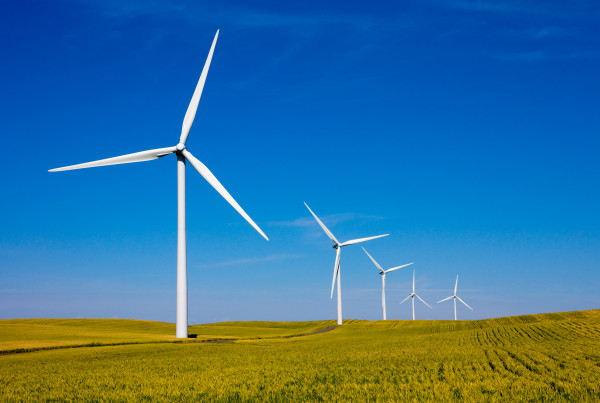
If a renewable developer builds a windfarm on a farmer’s land, bringing in workers from the cities and material from the port, it might benefit the developer and the farm but do little for the wider community. But it could be done differently.
The developer could employ locals, and – if efforts to bring back manufacturing pay off – locally made components could be used wherever possible. Many renewable energy developers are already doing this.
This is why the proposed Future Made In Australia Act is a very real opportunity to deliver energy justice for our regions and rural communities.
Energy justice? It means making sure the energy transition works for communities and individuals rather than just manufacturers and businesses.
If the green transition is imposed on communities, rather than done with them, it could easily founder on local opposition, as the recent Dyer Review of community engagement makes clear.
Most of our green energy transition will take place in regional and rural communities inside the Renewable Energy Zones chosen for their good renewable resources and access to transmission.
To make sure these communities actually benefit, Australia needs to co-design clean energy projects with rural communities, just as projects often do in the European Union. Co-designing projects helps communities feel a sense of, and sometimes literal, ownership of projects, and makes it more likely they will benefit. It’s a key way to ensure a project has a sustained social license within communities.
Queensland might be a first mover here by legally defining social license and requiring renewable energy developers to engage with communities.
Could Australian-made really work?
Some have described the government’s plans as a “new protectionism”, picturing a return to high tariffs and products of dubious quality propped up by subsidies.
There’s a low chance we will go directly head-to-head with green energy giants such as China. But Australia has existing advantages we can make more of.
For instance, we’re already one of the world’s top per capita users of solar, and our food exports are highly regarded. So why not combine them?
Agrivoltaics – combining solar panels with farming – is forecast to become a A$14.4 billion market by 2031.
America, the EU, Germany, France, and Italy all have policies aimed at boosting their agrivoltaics sectors supported by research, subsidies, and tariffs.
Australia has world-leading solar photovoltaic expertise, which we could tap into to create custom-designed agrivoltaics solutions, co-designed with farmers.
These future farming systems could create a new export industry, with investment opportunities and potentially tax credits brought by the new legislation.
Similarly, our bioscience experts are highly regarded. We could find ways of creating industries spun off from organisations such as the Centre for Synthetic Biology, who have found novel ways to safely store carbon, or turn biological waste into biofuels.
The timing is good – the World Economic Forum earlier this year called for better financing and development of these types of technologies. Like agrivoltaics, these kinds of inventions offer double benefits – cut carbon emissions, boost farm productivity.
If the Made in Australia plans become law, we would likely see finance flow to other future-focussed industries, such as CSIRO’s goal of ultra-low cost solar, the potential for green hydrogen to substitute for fossil gas exports through to the recently announced Solar Sunshot program, aimed at localising more solar production.
We should use our comparative advantages
Much of the detail in the Future Made in Australia Act remains to be seen. But what is clear is it represents a real chance for our regional and rural communities to lead the energy transition.
We could combine our renewable energy and critical minerals riches with our top energy, biotech and agricultural researchers. And we can do it while uplifting the regional and rural communities which will play home to this transition.