WHY are women’s health and public health held to different standards?
After all, women make up about half the public … right?
But watching the Prime Minister’s press conference last week, when he announced Australia would essentially pull the rollout of the AstraZeneca COVID-19 vaccine for under-50s over blood clotting concerns, I couldn’t help but feel there was a double standard.
Which members of the public does our government care about?
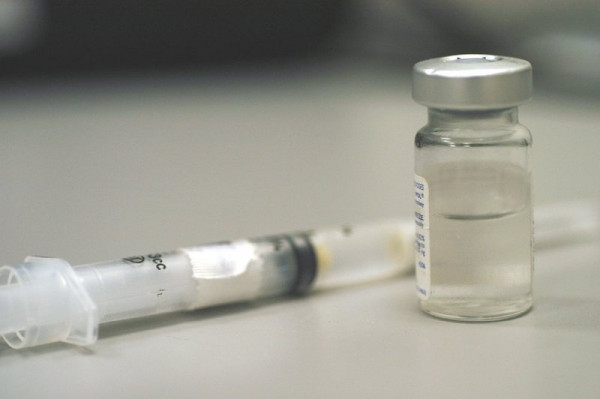
Last Thursday, Scott Morrison, flanked by Health Minister Greg Hunt and senior health figures, fronted the cameras to say the AstraZeneca vaccine, which Australia had heavily invested in, was no longer recommended for people under 50 due to a risk of blood clots, basing the decision on “an abundance of caution”.
According to the Australian Technical Advisory Group on Immunisation, which made the recommendation to pull the pin on the AstraZeneca rollout for under-50s, the risk of developing a clot due to the vaccine is about one in 200,000, or possibly as low as one in 500,000.
According to Mr Morrison, that equates to “one to five for every million” people vaccinated.
For our health officials, that was too big a risk.
But, by the Prime Minister’s own account, the oral contraceptive pill could lead to clotting in seven to 10 people in 10,000. Indeed, earlier in the week Mr Morrison used the pill as an example to “put it in perspective” how safe the AstraZeneca vaccine was by comparison.
Whichever way you slice it, the risk to women on the pill is much, much higher than the risk to those getting the vaccine – by an order of magnitude. It’s hundreds, if not thousands, of times more dangerous to take the pill than to get the AstraZeneca vaccine.
And there’s millions of women taking the pill in Australia every year. I’ve been one of them.
The vaccine risk is even higher for pregnant women, with at least one in 1000 at serious risk of blood clots.
So why the difference in how those risks are evaluated by our most trusted medical professionals, and our government?
To have a government finally begin to take a life-threatening issue seriously only when it affects men is galling.
It felt like a punch in the gut, especially after the year we’ve had, when women across the country have hit breaking point over institutionalised sexism and issues of their safety.
I’ve asked myself time and again why the clotting risk is acceptable for women to take every day, but not for men.
Why is our health worth less? Why is my health worth less?
I’m not saying the experts are wrong, and I’m not saying we should crack on with the vaccine rollout despite the risks.
It would be easy, too, to draw parallels to the stalled search for a male equivalent to the contraceptive pill, which hasn’t been approved for public use due to an increased risk of depression in those taking it – again, a well-known side effect of the pill millions of women already take every day.
I’m not arguing we should roll that out, either.
I’m just saying that it hurts women to realise how little the risks that are common – almost expected – for half the population seem to matter.
I guess it really is a man’s world.