OPINION – Jason Modica, Mildura counicllor
A QUOTE credited to Mark Twain states “whisky is for drinking and water is for fighting over”.
His quip prompts many questions. Why does one of the key elements in our existence, water, once commodified create such hyper political responses?
This can be seen through the 1500-gigalitre cap on water buybacks in 2015 and the 2018 Northern Basin disallowance of 70GL of water taken from the environment and returned to the consumptive pool.
The 70GL would have benefited the lower Darling as it dried and fish kills loomed ominously.
Both decisions were highly political and not based in science for the benefit of the Murray-Darling Basin.
Flow data on the Darling River below Bourke from 2000 to 2020 showed water that once filled the Menindee Lakes, kept water allocations high for Sunraysia’s irrigators and added great value to end-of-Murray flows in South Australia, had reduced greatly.
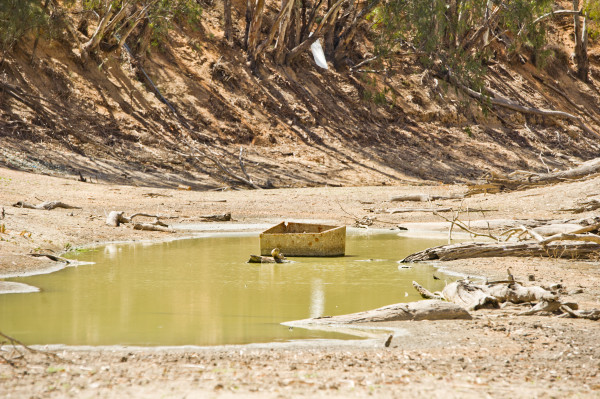
The Darling had two cease-to-flow events between 1900 and 1999 and 15 from 2000 until 2018. One of these events was more than 500 days.
The lower Darling is on the verge of collapse. It is the forgotten river in the Basin Plan.
The millennium drought only exists in memory but the 40 per cent allocations to irrigators on the Murray system is not easily forgotten.
In Merbein, 30 per cent went out of production during this period. Many others left the horticulture industry or fought through as best they could.
Others sold water because it was the only asset of value left.
Droughts are a known fact. If you grew up in the region you know that after a big flood like earlier this year, within a few years there will be a drought.
From 1997 to 2018, the irrigable area in the Mallee catchment increased by 40,825 hectares, from 40,325 hectares to 81,150 hectares. The numbers would be higher today.
The ability to water these developments will be a challenge when allocations drop below 50 per cent.
Mildura and surrounding districts hold 328GL of permanent water but require close to 600 GL to water all permanent plantings, which is purchased from the temporary market. Who purchases this water and where it goes is hard to tell through the lens of a drought.
The multilayered political systems of the Basin do not assist when frank and fearless discussions are required around water and the hydrological needs of rivers.
Unbundling water delivered many benefits to the Basin and our region, but there needs to be greater regulation of development.
Our knowledge of droughts through Indigenous and colonial history should assist with this kind of regulation.
The economic downturn a drought will inflict, and the ability of certain sectors of the horticultural industry to buy water because of commodity prices and water prices, will be a challenge to the region.
An ongoing discussion about navigating these challenges is essential.
Finally, there is the projected 30 per cent decline of intake into the Murray-Darling Basin because of climate change.
All water users are in a very precarious position and how we work through these problems will dictate how historic over-extraction, over-allocation, over-development and the potential for a mega drought driven by climate change is dealt with.
A key question to be answered is how much benefit has the environment gained from the $13 billion MDBP?
I would say it was money well spent if native fish numbers increased at a similar rate to the growth of permanent plantings. Or the growth of dollars returned on permanent water prices matched an increase to end of system flows.
Without increases in the health of the Basin’s waterways it could be considered that the money spent on the Basin was for capital return, not healthy river systems.